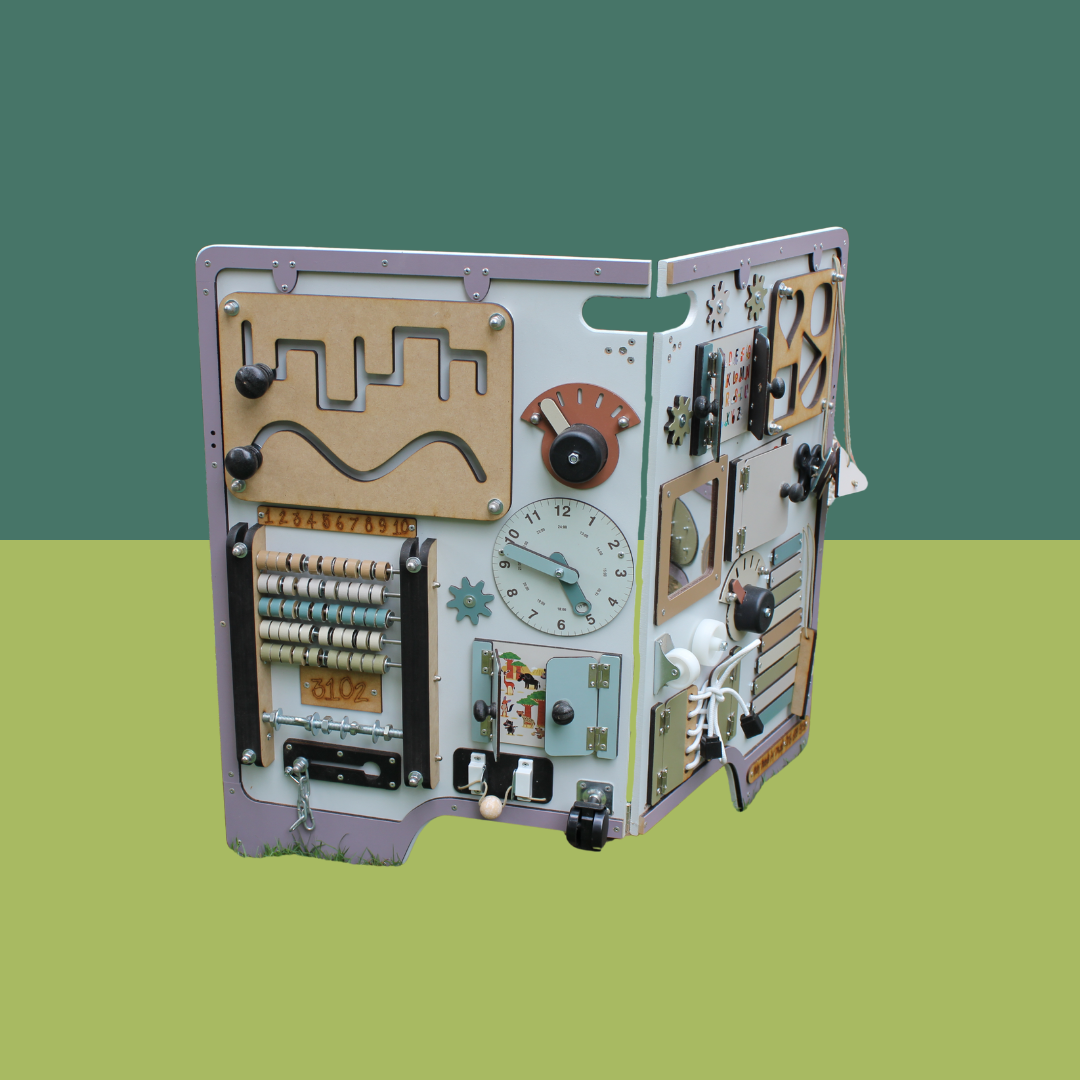
As parents, we are always looking for ways to support our children’s growth and development. One of the most effective — and fun — tools available today is the busy board. Designed to engage little hands and curious minds, busy boards have become a staple in early childhood development circles, and for very good reason.
What Is a Busy Board?
A busy board is a hands-on activity board packed with latches, zippers, buttons, buckles, wheels, and other interactive elements. The goal is simple: keep toddlers engaged while helping them develop fine motor skills, hand-eye coordination, and problem-solving abilities. Think of it as a self-contained world of discovery that keeps little ones occupied for extended stretches of time.
The Role of a Sensory Board in Child Development
A sensory board takes the concept a step further by incorporating textures, colours, sounds, and materials that stimulate multiple senses at once. From smooth wooden surfaces to rough fabrics, soft foam to crinkly materials, a well-crafted sensory board encourages children to explore the world through touch, sight, and sound.
Research in early childhood education consistently shows that sensory play builds nerve connections in the brain’s pathways, leading to improved cognitive growth, language development, and the capacity to complete more complex learning tasks. A quality sensory board is one of the most direct ways to give your child this advantage at home.
Key Benefits at a Glance
- Fine motor development: Manipulating small components strengthens the tiny muscles in fingers and hands, preparing children for writing and self-care tasks.
- Concentration and focus: The varied challenges on a busy board naturally extend a toddler’s attention span without any screen time involved.
- Independent play: Children learn to entertain and challenge themselves, building confidence and self-reliance.
- Problem-solving skills: Figuring out how a latch opens or how a zipper works teaches logical thinking in a completely organic way.
- Sensory integration: Regular engagement with a sensory board helps children process and respond to sensory information more effectively.
Choosing the Right Board for Your Child
Not all busy boards are created equal. When selecting one, look for solid construction, child-safe materials, and age-appropriate components. Boards designed for toddlers aged 1–3 should focus on simpler tasks like velcro, large buttons, and easy latches, while boards for older children can include more complex mechanisms.
Handcrafted options are particularly popular among parents who value quality and durability. A well-made busy board can last through multiple children and years of enthusiastic play.
Final Thoughts
Whether you are looking to support developmental milestones, reduce screen time, or simply give your toddler an engaging and enriching activity, a sensory board is one of the smartest investments you can make in your child’s early years. The benefits are real, the play is joyful, and the developmental rewards last a lifetime.